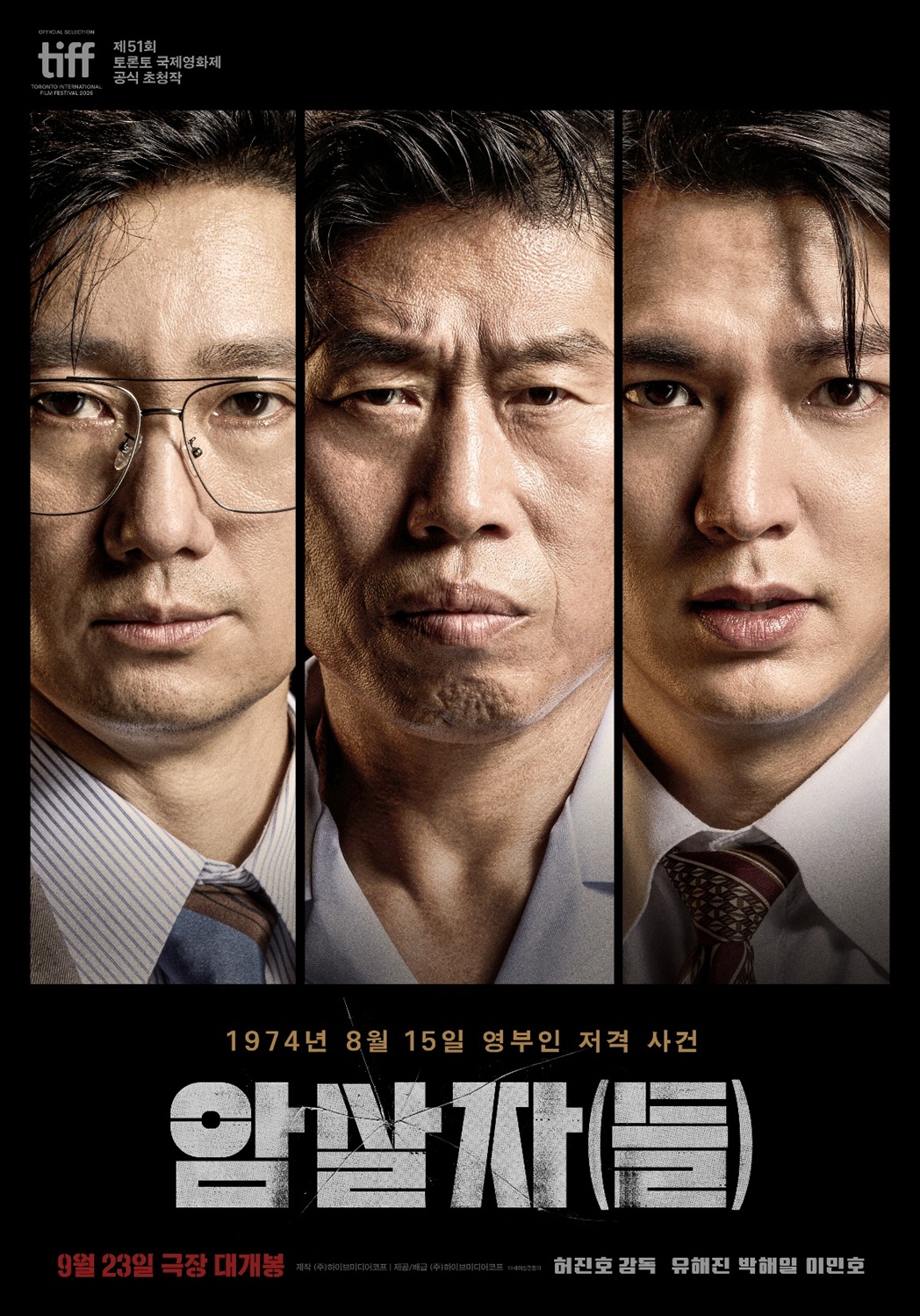
▲ Poster for the film ‘The Assassin(s)’ (Photo provided by Hive Media Corp)
Dexter Studios participated in the production of the film ‘The Assassin(s)’, one of the most anticipated releases for the Chuseok holiday season, capturing the historical atmosphere and tension of the 1974 event through color and sound.
Comprehensive content studio Dexter Studios (206560, hereinafter “Dexter”) announced that it provided Digital Intermediate (DI) color grading and sound design technical services for the film ‘The Assassin(s)’ alongside its sound subsidiary, Livetone.
‘The Assassin(s)’ delves into the suspicions and masterminds behind the shocking assassination attempt on the First Lady of South Korea on August 15, 1974. Directed by Jin-ho Hur, the film stars Hae-jin Yoo, Hae-il Park, and Min-ho Lee. Prior to its domestic release, the film was officially invited to the Gala Presentations section of the 51st Toronto International Film Festival, demonstrating global interest as all local screenings sold out. Domestically, it topped the Korean film ticket reservation charts before opening, establishing itself as a major blockbuster for the second half of the year.
Dexter integrated its accumulated technical expertise from working on major modern historical period pieces into ‘The Assassin(s)’. Dexter DI Department and Livetone have previously elevated the production quality of numerous works dealing with historical backgrounds and events, including A Taxi Driver, The Man Standing Next, 12.12: The Day, Harbin, The Age of Shadows, The Fortress, Escape from Mogadishu, and the Disney+ series Made in Korea.
Dexter DI Department used photo albums from the 1970s and 1980s as key references to replicate the rich, soft tones characteristic of film photography from that era. Reducing the distinct feel of digital cinematography, they created a look where the texture of analog film is naturally felt, focusing on capturing colors and contrasts that evoke the air of 1974.
Senior Vice President Jin-young Park, a senior colorist at Dexter DI Department who led the digital color grading, stated, “Rather than expressing the period darkly with vintage tones simply because it is a period drama, I wanted to deliver the feeling that the audience is stepping directly into the year 1974 using clear, rich colors. We expressed the mounting tension as characters track down the event through color density and subtle shifts. I hope audiences will fully immerse themselves in the characters and events.”
Livetone, responsible for sound design, referenced archival footage to recreate sounds from the era, including the central gunshots, vintage automobiles, police sirens, and ambulances. They meticulously designed everyday sounds prior to the incident—typewriters, telephones, radios, TV broadcasts, and traffic—achieving spatial resonance and sonic textures that allow the audience to naturally experience the atmosphere of 1974.
Sound Supervisor Tae-young Choi, CEO of Livetone, remarked, “We focused on what the characters were listening to, designing the sound so that its significance shifts scene by scene. When familiar gunshots and subtle everyday sounds reappear, they serve as new clues and questions, allowing the audience to trace the truth alongside the characters.”
Meanwhile, Dexter Studios recently announced a new VFX production contract worth 8.5 billion KRW and a 1.0 billion KRW contract increase (bringing total supply to 6.8 billion KRW). Collaborating with various production studios across all post-production sectors—including VFX (Visual Effects), DI, DIT (Digital Imaging Technician), sound design, and mixing—Dexter continues to expand its unrivaled capabilities across theatres, OTT platforms, films, dramas, and animation.