Tae-young Choi, CEO of Dexter Subsidiary Livetone, Honored at ‘2026 Korean Popular Culture and Arts Production Staff Awards’: “Recognized for Setting the Standard of K-Sound”
▲ Tae-young Choi, CEO of Livetone, receives his award at the ‘2026 Korean Popular Culture and Arts Production Staff Awards’ held on November 12.
(Photo provided by Dexter Studios)
Livetone, a sound specialized studio and subsidiary of Dexter Studios, has been recognized for its expertise and technological prowess in leading the advancement of the domestic film sound industry.
Comprehensive content studio Dexter Studios (206560, hereinafter “Dexter”) announced that Tae-young Choi, CEO of Livetone, received the Korea Creative Content Agency (KOCCA) President’s Award at the ‘2026 Korean Popular Culture and Arts Production Staff Awards’ held on November 12.
Celebrating its 10th anniversary, the Korean Popular Culture and Arts Production Staff Awards is the nation’s sole government commendation system dedicated to discovering and encouraging production staff contributing to the growth of the pop culture and arts industry. CEO Choi was honored in recognition of his long-standing dedication to pioneering technological development in domestic film sound production, thereby elevating the technical precision and industrial competitiveness of Korean cinema.
Over the past 30 years, CEO Choi has participated in the production of over 300 films and OTT contents, spearheading the evolution of ‘K-Sound’. Notably, he oversaw sound design for 12 domestic films that surpassed 10 million admissions, including ‘The King and the Clown’, ‘The Host’, ‘Haeundae’, ‘Miracle in Cell No. 7’, ‘The Attorney’, ‘Roaring Currents’, ‘Train to Busan’, ‘the Along with the Gods series’, ‘A Taxi Driver’, ‘Parasite’, and ‘12.12: The Day’. Across both blockbuster hits and critically acclaimed features, he has delivered optimal soundscapes that complete the atmosphere and narrative of each work.
CEO Choi’s production capabilities are particularly prominent in his long-standing collaboration with world-renowned auteur Director Joon-ho Bong. Starting with ‘Barking Dogs Never Bite’, Choi has handled sound design for every single feature film directed by Bong, including ‘Memories of Murder’, ‘The Host’, ‘Snowpiercer’, ‘Okja’, ‘Parasite’, and ‘Mickey 17’. In 2020, he gained international acclaim by winning the Outstanding Achievement in Sound Editing – Feature Foreign Language award for Parasite at the 67th Golden Reel Awards hosted by the Motion Picture Sound Editors (MPSE) in the United States.
Building on his domestic and international recognition, he continues active exchanges with the global film community. CEO Choi has been invited alongside Director Joon-ho Bong to serve as a mentor at the ’63rd Taipei Golden Horse Film Festival’ Master Class, running from November 14 to 21. On November 14, Choi will conduct a master class for around 200 Taiwanese filmmakers and hold a small-scale workshop with sound artists to share his K-Sound production experience and technical know-how accumulated on film sets. Alongside the Hong Kong Film Awards and China’s Golden Rooster Awards, the Golden Horse Awards is considered one of the top three Chinese-language film awards, renowned for spotlighting artistic and technical excellence throughout its long history.
Meanwhile, CEO Choi has expanded his creative scope beyond traditional video content into media art, transforming cinematic sound from the screen into spatial experiences where visitors immerse themselves physically. He participated in the sound design for ‘Flashback Gyerim’, an immersive media art exhibition presented by Dexter’s subsidiary FlashbackGround. Reinterpreting the history and legends of the Silla Dynasty through modern media technology, the exhibition earned praise for its multisensory experience driven by immersive sound that maximizes spatial characteristics and narrative depth.
Tae-young Choi, CEO of Livetone, stated, “I believe this award belongs to the colleagues who have pondered and worked alongside me for a long time, as well as all the production crew who have upheld the Korean film sound industry. Though sound is invisible, it is an essential element that completes a work’s universe and forms an emotional bond with the audience. I am deeply grateful for the recognition of the time and effort quietly built behind the screen over the past 30 years.”
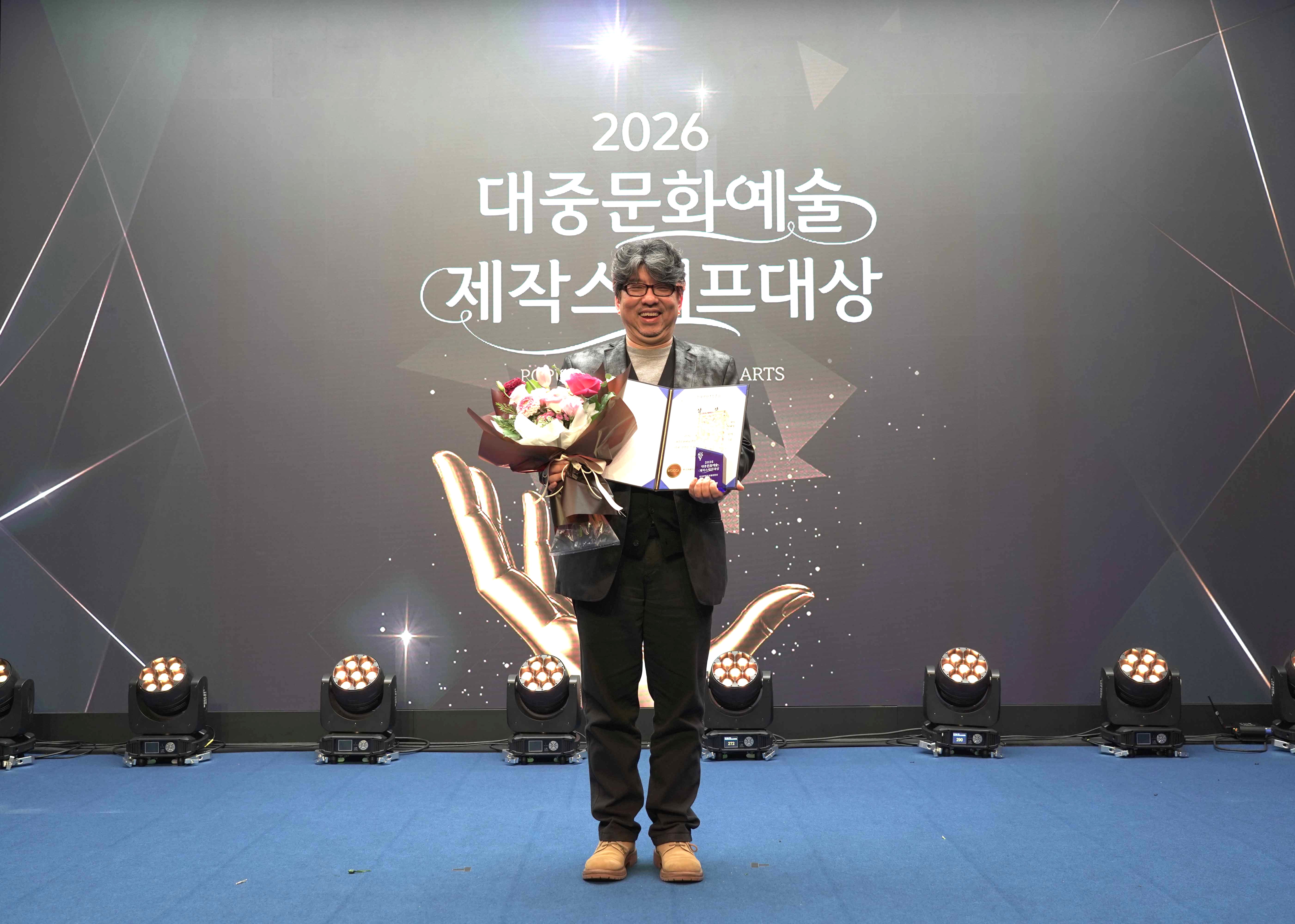 ▲ Tae-young Choi, CEO of Livetone, receives his award at the ‘2026 Korean Popular Culture and Arts Production Staff Awards’ held on November 12.


